Filmmaking Questions Every Filmmaker Should Be Asking
by WriteSeen
Filmmaking questions usually show up too late, after you've already picked the format, promised a shoot date, or spent money on gear you didn't need. Most stalled projects aren't missing passion. They're missing a few blunt questions early, before the first call sheet and the 2 a.m. panic.
What matters is knowing what you're making, why it needs to exist as a film, and what can break the thing before post. Start here:
- Ask what the film is really about beyond the logline
- Check if the format fits the story, not your ego
- Figure out what needs protecting before you share it
You'll make cleaner decisions fast.
Why Filmmaking Questions Matter More Than Gear, Contacts, or Confidence
Most creators don’t stall because they lack talent. They stall because they’re asking the wrong things, or worse, not asking at all. The best filmmaking questions aren’t proof that you’re behind. They’re proof that you’re taking the work seriously.
A lot of fear sits underneath this. You don’t want to waste six months on the wrong version of the idea. You don’t want to show unfinished work and get flattened too early. You don’t want to look inexperienced in front of people who seem more certain. Fair enough. But certainty is overrated in filmmaking. Judgment is not.
Better questions sharpen every department:
- Writers make cleaner structural choices
- Directors stop forcing scenes that don’t belong
- Producers see risk before it becomes cost
- Editors find the real film instead of the planned one
- Teams communicate with less confusion and less ego
Big budget mistakes are still mistakes. Small films with sharp judgment often land harder because every choice had to earn its place. That’s usually the difference. Not access. Not swagger. Not the camera package.
Strong work usually starts with stronger questions, not louder confidence.
What Filmmaking Questions Actually Cover
When people hear “filmmaking questions,” they often think production problems. Shot lists. Lenses. Call sheets. That’s a narrow view, and it causes trouble early.
The real scope runs across the full pipeline. Different creators will lean harder on different parts, but the core categories stay useful:
- Idea and story questions
- Audience and format questions
- Pre-production and planning questions
- Production and leadership questions
- Post-production and feedback questions
- Career, pitching, and discovery questions
A writer-director self-financing a short won’t ask exactly what a documentary producer asks. An editor joining late won’t frame problems like the person who originated the project. Still, the strongest filmmakers revisit the same core questions again and again because the project changes. By the second draft, by the first scout, by the rough cut, the answer is often different.
That’s not inconsistency. That’s process.
The First Filmmaking Questions to Ask Before You Make Anything
Before you budget a scene or text a cinematographer, slow down. Early choices decide more than people think, and bad assumptions get expensive fast.
Start Here:
- What is this film actually about beyond the logline?
- Why does this need to be a film instead of prose, audio, theatre, or something interactive?
- What pressure is driving it emotionally?
- Who is it for, really?
- What should that audience feel or sit with afterward?
- Is this a short, feature, documentary, desktop documentary, experimental piece, pilot, or proof of concept?
- What version is achievable with what you have now?
- What would make it honest instead of derivative?
Some stories tell you their own form if you stop trying to impress yourself. A fragmented digital subject may want a desktop structure. A contained emotional turn may be stronger as a short than a stretched feature. We’ve seen creators force ideas into the wrong shape because the “bigger” version felt more legitimate. It rarely helps.
If the form fights the material, believe the material.
Story and Script Questions That Make the Film Stronger
A script usually weakens in familiar ways. It explains too much. Repeats beats. Hides conflict inside clever dialogue. You don’t fix that by polishing pages forever. You fix it by getting more exact.
Questions Worth Pressing On
- What does the protagonist want, and what’s actually blocking them?
- What changes by the end?
- Is the conflict coming from character, system, relationship, or self-contradiction?
- Which scenes are carrying the film, and which are just restating information?
- Are you telling the story visually, or making dialogue do the heavy lifting?
- What genre promises are in play, and which ones should be broken on purpose?
- Do the characters feel lived-in or assembled?
- What research is missing?
Theme matters, but not as a statement you can paste into a deck. It should shape structure, images, pacing, performance. If your theme disappears the second someone stops talking about it, it’s not embedded yet.
This is especially true with adaptations, stage-to-screen work, and projects with transmedia potential. A play can survive on contained language. Film usually can’t. If you’re adapting, ask what cinema adds that the original form couldn’t do.
Format and Medium Questions: What Kind of Film Should This Be?
This is where ego does real damage. Plenty of ideas should not become features. Some shouldn’t be films at all.
A short film can be the right answer when the concept is concentrated, the image system is strong, and the emotional turn is precise. Shorts are also more achievable and easier to move through festival channels, though they still need discipline. Short doesn’t mean casual.
A feature asks for narrative endurance. Not just a premise, endurance. If the central tension is spent by minute 18, the format is wrong.
Documentary brings a different set of pressures. Access, ethics, changing reality, unclear structure. You don’t control the material the same way, which means you need stronger judgment, not less.
Hybrid forms, essay films, and desktop structures can unlock projects rooted in fragmented experience, online culture, archives, or mediated identity. Sometimes the form isn’t a stylistic flourish. It’s the only honest way in.
Choose the container that serves the material. Trend-driven format decisions age badly.
Pre-Production Questions That Save Time, Money, and Momentum
Pre-production is where ambition either becomes workable or stays fantasy. People love to call themselves “scrappy” right up until the schedule collapses on day two.
A useful planning mindset looks like this:
- What is the real budget, not the optimistic one?
- Which locations, cast count, effects, and gear needs are essential?
- Where are the pressure points in the schedule?
- What permits, insurance, releases, and clearances are required?
- What crew is necessary for safe, competent execution?
- What can storyboards, references, rehearsals, and a shot list solve now?
- What equipment fits the project instead of signaling status?
Good equipment choices are boring in the best way. They match budget, workflow, location limits, and image needs. A camera that drains time, media costs, or post complexity can be the wrong camera even if it looks impressive on paper.
Planning is not the enemy of creativity. Bad planning is.
Collaboration Questions for Directors, Producers, and Small Teams
Filmmaking gets romanticized as vision. In practice, it’s communication under pressure. If your team doesn’t know what film they’re making together, “vision” is just a private feeling.
Get Clear Before the Pressure Hits
Who needs to be involved early? Who can come in later? Which decisions belong to the director, producer, cinematographer, editor, or composer? On microbudget projects, where people wear multiple hats, role confusion spreads fast.
Useful teams tend to agree on a few things early:
- What the film is trying to make the audience feel
- What visual and sonic choices are non-negotiable
- How feedback will be handled in prep and post
- What happens when time forces compromise
We’ve seen strong shoots get softer results because sound was brought in too late, or because post was treated like cleanup instead of authorship. Bring key collaborators in before the work hardens. You want alignment, not obedience.
Production-Day Questions When Reality Stops Matching the Plan
The plan will break. Something runs long. A location changes. Light disappears. An actor needs a different note. This is normal. The question is whether you know what to protect.
Ask, In Order:
- What matters most in this scene right now?
- If time goes, do we protect performance, coverage, safety, or schedule?
- What can be simplified without harming the scene?
- Is the camera serving emotion or showing off?
- Are the actors getting actionable direction?
- What continuity, sound, or lighting issues are being pushed into post?
Here’s the practical truth: some directors cling to nonessential ideas because they confuse effort with value. A complicated move that steals time from the performance is often a bad trade. A simpler setup that gets the emotional beat cleanly is usually the professional choice.
Fast adaptation is not compromise of principle. It’s part of the job.
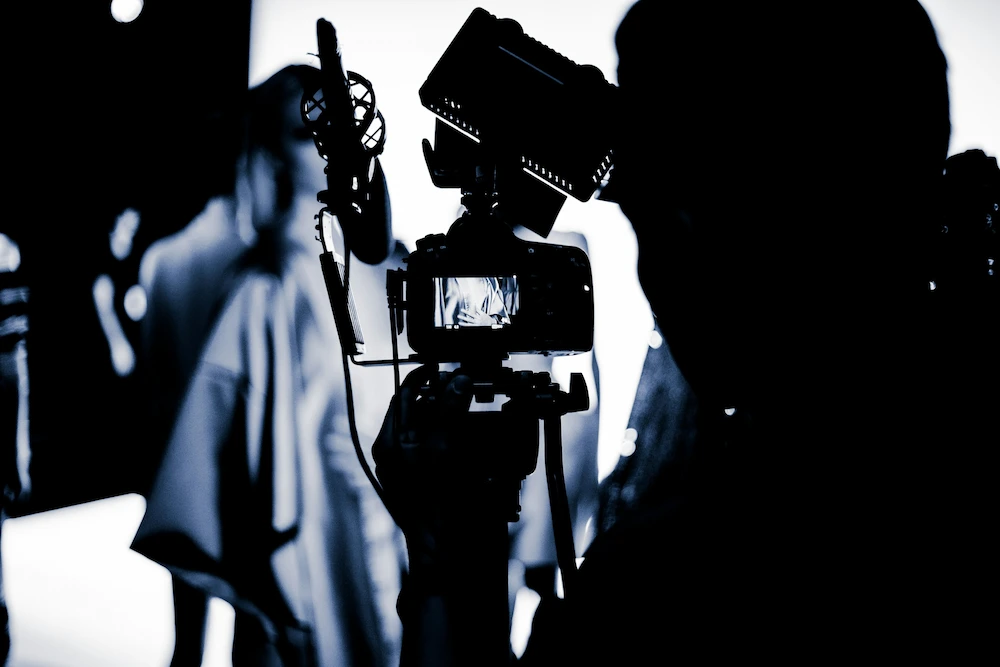
Post-Production Questions That Reveal What the Film Actually Is
You don’t fully know the film until footage exists. That’s not failure. That’s why editing matters.
The rough assembly is useful because it exposes the natural rhythm before refinement starts. Sometimes it confirms the plan. Often it doesn’t. The center of gravity shifts. A minor beat becomes essential. A scene you fought to shoot turns out to be dead weight.
In the Cut, Ask Harder Things
- What is the film saying now?
- Which scenes are emotionally necessary?
- Which ones only explain?
- Are you protecting sunk-cost decisions?
- How are sound, music, silence, and pacing changing the meaning?
- What should early viewers test before lock?
A lot of filmmakers over-explain in the edit because they no longer trust the material. Usually the stronger move is subtraction. Let the audience do some work.
Feedback Questions: When to Share, Who to Ask, and What to Listen For
Not all feedback is helpful, and not all privacy is wisdom. Timing matters. So does context.
If the work is so early that nobody can tell what you’re trying to do, broad evaluation may only create noise. But if you wait until everything feels emotionally irreversible, useful notes get harder to hear. There’s a window.
Ask for the kind of feedback that matches the stage:
- Concept stage: clarity, viability, audience
- Script stage: structure, character, visual storytelling
- Assembly stage: rhythm, confusion points, emotional engagement
- Fine cut: precision, pacing, final weak spots
- Pitch materials: clarity, distinctiveness, readiness
The best notes usually point to a real issue, even when the suggested fix is wrong. Taste mismatch sounds different. Learn the difference.
This is where environment matters. On WriteSeen, creators can store projects securely, choose whether work stays private, open it to community feedback, or make it visible to verified professionals. That control changes behavior. People share more strategically when they’re not forced into all-or-nothing exposure.
Protection Questions Every Filmmaker Should Ask About Their Work
Creators are often told to “just put it out there.” That advice gets sloppy fast. Visibility matters, but so does control.
You Should Know:
- How authorship is documented over time
- What risks come with sharing too widely, too early
- Which drafts, cuts, decks, scripts, and assets need secure storage
- What proof exists if timeline or ownership is questioned
- What platform terms say about your rights
Digital timestamping matters because memory is weak and disputes get messy. Secure storage matters because your project history is part of the work, not separate from it. When creators trust the environment, they’re more willing to show the work at the right moment instead of hiding it forever.
Protection isn’t paranoia. It’s professional hygiene.
Career and Industry Questions: How Will This Film Be Seen, Shared, or Discovered?
A finished film without a path is still unfinished in one important way. You need to know what the project is for.
Maybe it’s headed for festivals. Maybe it’s a proof of concept for financing. Maybe it’s an online release, a sample for representation, or part of direct outreach. Each path changes the materials you need:
- Synopsis
- Stills
- Trailer or teaser
- Director statement
- Poster
- Metadata
- Pitch deck, if the project is still developing
Professionals across film, TV, music, publishing, and interactive media are often looking for fresh IP and strong creators. The problem is discovery friction. If your work is scattered, undocumented, or invisible unless someone already knows you, you’re making that harder than it needs to be.
A real portfolio helps. Cold outreach alone rarely carries the load.
Questions to Ask Before Pitching Your Film to Anyone
A weak pitch is usually vague, inflated, or confused about what it wants. You can feel that in the room quickly.
Before Pitching, Get specific:
- What is the clearest version of the project?
- Why this story, why now, and why are you the right person to tell it?
- What stage is it actually in?
- Are you asking for financing, collaboration, feedback, distribution, or representation?
- What makes it distinct in tone, audience, concept, or execution?
- What will practical partners ask about budget, timeline, team, and feasibility?
Producers want to understand the project life cycle, market fit, readiness, and whether the team can execute. Don’t confuse artistic ambition with readiness. They are not the same thing.
Common Filmmaking Mistakes That Better Questions Can Prevent
Most avoidable damage starts earlier than people admit. Better filmmaking questions catch problems before they harden into cost, fatigue, or stalled momentum.
Common misses include starting production before the story is ready, choosing format for prestige, overspending on gear while underplanning, collecting random feedback without a framework, and ignoring post needs during the shoot.
Then there’s the quieter mistake: staying busy so you can avoid deciding. Busyness can look like progress for months. It isn’t.
And yes, some creators hide the work indefinitely because protection and sharing feel mutually exclusive. They’re not. You can protect the work and still place it where it can grow and be discovered on merit.
A Practical Filmmaking Questions Checklist by Stage
If you want something to return to mid-project, keep it simple. Good filmmaking questions don’t need to sound clever. They need to keep the film honest and moving.
Idea Stage
- Why film?
-
Why now?
Development Stage
- What is the theme, structure, and audience?
-
What research is still missing?
Pre-production Stage
- What is essential?
- What is affordable?
-
What is legally covered?
Production Stage
- What matters most today?
-
What can flex?
Post-production Stage
- What is the cut really communicating?
-
What feedback is needed now?
Release and Career Stage
- Who needs to see this?
- How will they discover it?
Keep the list visible. Revisit it when the project shifts.
How Creators Can Build a More Confident Process Around Their Questions
Confidence usually arrives after structure, not before it. If you want a steadier process, build one.
Keep a project question log. Revisit assumptions at each stage. Separate your identity from the current draft or cut. Organize your work so each project builds on the last instead of living as an isolated burst of effort.
A secure, searchable portfolio helps with that. On WriteSeen, creators can store evolving projects, track progress, control visibility, and build discovery around the work itself. That’s useful not because it feels official, but because it reduces friction. Protected work gets shared more intelligently. Shared work gets better.
The shift is quiet but important. You stop treating questions as evidence that you’re not ready. You start using them as part of how you work.
Filmmaking questions are not obstacles. They are the operating system. Ask better ones, and the film gets clearer, the process gets calmer, and the next step gets easier to trust.
Conclusion: Filmmaking Questions That Strengthen the Whole Process
The strongest projects usually do not come from having the most gear, the biggest crew, or the loudest certainty. They come from asking better questions at the right time, then letting those answers shape the work honestly. Filmmaking questions help you choose the right format, protect the story, avoid expensive mistakes, and move through each stage with more clarity and less noise.
The real advantage is not perfection. It is better judgment. When you understand what the film is trying to do, who it is for, what risks matter, and what needs protecting, the whole process becomes more focused. That is what gives a project momentum, strengthens collaboration, and helps the final work land with more impact.
Join WriteSeen to store your projects securely, control when and how you share them, get feedback at the right stage, and build a discoverable creative portfolio around your work. For filmmakers trying to ask sharper questions and make stronger decisions, it is a smarter place to develop, protect, and grow your film projects.
TAGS