Typeface Game: How to Play and Improve Your Design Skills
by WriteSeen
Most designers guess at spacing. A typeface game eliminates guesswork, letting you experiment with fonts, spacing, and letterforms in a fun, hands-on way.
These games help creators sharpen real-world design skills like kerning, font pairing, and type identification through instant feedback and playful challenges.
Whether you’re a writer, artist, or designer, typeface games provide a low-pressure space to practice and build confidence in your visual instincts. Explore different types, from kerning sims to font memory match, and discover which ones fit your creative goals best.
Understand What a Typeface Game Is
Whether you are designing, writing, or building creative projects, typeface games serve as interactive training grounds to fine-tune your typography skills in a hands-on, low-risk way. These games tackle specific challenges and help you avoid common mistakes around font spacing, recognition, and pairing. Unlike textbook drills, typeface games throw you into rapid-fire feedback loops that sharpen judgment and turn taste into repeatable decisions.
What Sets a Typeface Game Apart?
-
Focused, Feedback-Driven Practice
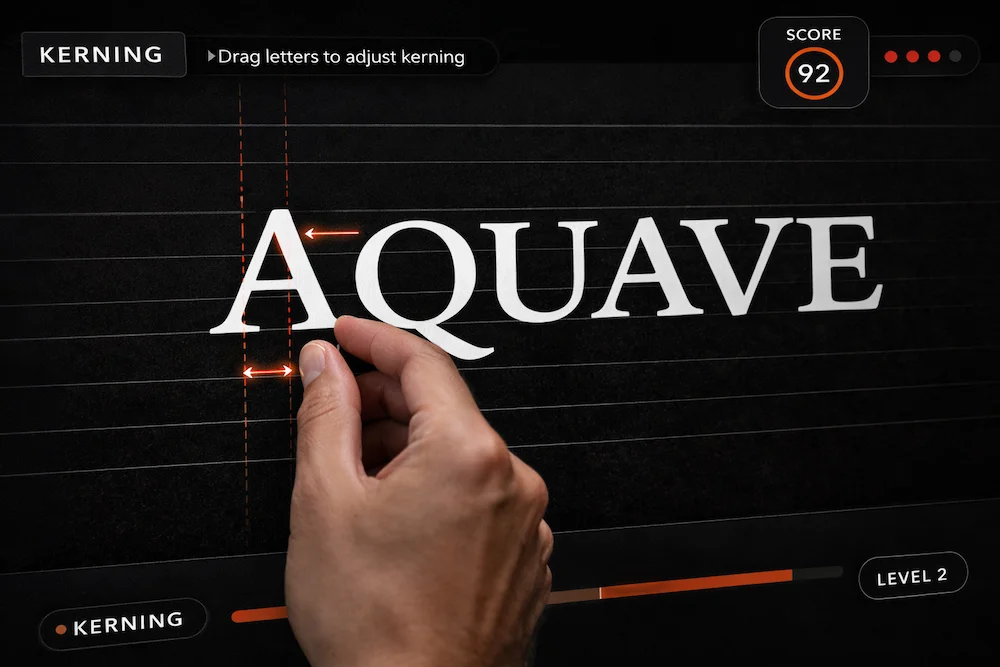
Each game shapes one key area of typography with instant feedback and scoring. Kern Type puts your kerning directly against typographer benchmarks, spotlighting every micro-adjustment.
-
Level Progression, Scoring, and Comparison
From beginner modes in I Shot the Serif! to the expert-only Rather Difficult Font Game, the structure lets you grow at your own pace. You see your solutions beside expert versions or community averages.
-
Variety of Skills Targeted
Games train you in kerning, font identification, letterform shaping, and pairing logic. Shape Type drills vector letter construction and history. Typewar rapidly builds font ID intuition, pushing you to recognize unique glyph profiles in seconds.
-
Objective Outcomes, Not Just Gut Feel
You convert subjective taste into measurable improvements. Numeric scores, side-by-side visuals, and community rankings provide reference points you can trust.
-
Accessible, Repeatable, and Fun
Most are browser-based and easy to pick up, delivering serious skills via playful repetition. Each round is a low-pressure slice of practice you can fit between larger projects.
Games turn vague instinct into objective growth and let you build creative muscle, one keystroke at a time.
When you invest regular minutes into these challenges, you start thinking about type like a pro—spotting issues before they appear in your real-world projects.
Learn Why Typeface Games Matter for Creative Professionals
Every creative professional relies on visual design to make work readable, engaging, and persuasive. Yet most creators feel uncertain with type. Second-guessing fonts, worrying about getting hierarchy right, fearing that your instincts just aren't sharp enough. That hesitation costs time and holds back your creativity.
The right typeface games break that pattern and put confidence within reach. Here’s why:
Pain Points Type Games Directly Solve:
-
Kerning and Letter Spacing Problems
Kern Type isolates manual adjustments and lets you see precise pixel-by-pixel changes, so you stop defaulting to “good enough.”
-
Font Choice Doubt
Typewar and The Font Game give you exposure to hundreds of typefaces, building recognition and eliminating indecision.
-
Font Pairing Anxiety
Type Connection teaches pairing rationale and helps justify your choices to clients, not just yourself.
-
Readability Challenges
Ragtime shows how paragraph-level tweaks increase clarity, so your stories are easier to digest on any platform.
You get immediate, gamified feedback—your errors are no longer scary; they’re stepping stones. When you treat mistakes in-game as data, not failure, your real projects benefit.
WriteSeen’s approach multiplies this growth. We support peer ratings and secure feedback on your typographic studies, so you can test ideas, learn faster, and improve with real critique. Your progress becomes portfolio-ready evidence, and you’re connected to a global creative community of writers, creators, artists, and designers who care about leveling up—just like you.
The journey from hesitant to confident designer starts with a single click—and the right mix of playful, data-driven practice.
Explore the Most Popular Typeface Games to Play Online
You need the right tool for your specific challenge. Knowing which typeface games exist—and when to use each—matters. Here’s a snapshot of the top online typeface games, what they teach, and who should play them.
Essential Typeface Games and Their Speedy Takeaways:
-
Kern Type (https://www.kerntype.com/)
Train kerning by spacing letter pairs, match expert solutions, and see a numeric score. Ideal for designers hungry for pixel-level mastery.
-
Shape Type (https://www.shapetype.com/)
Adjust individual letterforms with vector controls. Perfect for type designers learning Bézier curve discipline and building a historical eye.
-
Typewar (https://typewar.com/)
Identify typefaces faster than your peers. Best for content creators needing quick font recognition across projects.
-
Font Memory (https://betterwebtype.com/font-memory-game/)
Hone visual memory through font-matching blitz rounds. Great for juniors locking in fundamental font differences.
-
Type Connection (http://www.typeconnection.com/)
Pair fonts and defend your choices. Critical for anyone who curates a design system or needs to justify their typographic hierarchies.
-
The Font Game (http://ilovetypography.com/fonts/fontgame/)
Guess the font by name and improve recognition speed. Use to sharpen your eye for distinguishing features.
-
The Rather Difficult Font Game (https://www.sanskritweb.net/fontgame/)
Identify subtle differences in advanced font rounds. Suits pros developing keen forensic skills.
-
I Shot the Serif! (https://www.k-type.com/game/ishottheserif.html)
Spot and shoot serifs at speed. Structured for all levels, this one builds classification skills fast.
-
Ragtime (https://www.playragtime.com/)
Master paragraph rag settings. Essential for editors and anyone working with long-form text layouts.
-
The Bézier Game (https://bezier.method.ac/)
Control Bézier curves for flawless vector letter drawing. The go-to for designers refactoring custom logos or type.
Each game hits a pocket of the typographer’s workflow. Play short sessions focused on your weakest link: recognition, kerning, or pairing. Stack them for complete skill coverage.
Discover How to Play a Typeface Game
When you want to sharpen a specific skill, pick a typeface game that matches your goal—then dive in. Most games start you on an easy level, guide you through controls, and ramp up difficulty as you improve.
You’ll See These Common Features:
- Levels that grow with your skill so you’re never stuck or overwhelmed
- Scoring to highlight specific strengths and gaps (like Kerntype’s 0–100 system)
- Timed rounds that build decision speed for production environments
- Expert or community comparisons to anchor your judgment
Keep your practice structured for maximum gains. Keep a short log: note your score, what you nailed, and what tripped you up. Upload screenshots for your own progress tracking or portfolio use.
If your scores plateau or mistakes pile up, treat them as signposts. Each error is a cue to study or slow down—not a failure.
The quickest way to build design instincts is to turn frustration into focused, bite-sized repetition.
Most browser-based games work on desktop; try keyboard shortcuts for speed. For curve drawing or kerning, desktops and tablets give you more control. Test each game on your everyday device so practice feels natural and connected to your workflow.
A quick tip: Stack your sessions. Warm up with a round of recognition (Typewar), move to kerning (Kerntype), then practice curves (Bézier Game). End every session with one goal for next time. That’s how you turn play into serious creative power.
Improve Your Typography Skills With Playful Practice
Strong creative work demands more than taste—it demands proof. Typeface games deliver quick rounds of skill-building, turning scattered guesses into deliberate, repeatable moves. Every session leaves you with hard evidence of growth.
Let’s break down what you gain:
Crucial Skills Gained in Typeface Games
-
Kerning
Kern Type transforms your sense of spacing. You learn to achieve visual balance between letter pairs—adjusting pixel by pixel, just like pro typographers.
-
Font ID and Selection
Typewar and The Font Game hone quick recognition. The ability to spot typefaces instantly is vital when building brand kits, designing covers, or pitching concepts.
-
Letterform Construction
Shape Type and the Bézier Game teach vector mastery. Every handle tweak and anchor point improves your control for custom logos, branding, or type tweaks.
-
Pairing and Hierarchy
Type Connection levels up your ability to create text hierarchies and reason through pairings. This becomes your defense for every design choice you explain to clients or peers.
-
Visual Memory and Recall
Font Memory’s quick cycles help you retain the look and feel of important fonts. In creative sprints, this gives you an edge when referencing or matching styles.
-
Macro Typography
Ragtime shows you the mechanics behind beautiful, readable paragraphs—not just letters. That’s a superpower for anyone in editorial, publishing, or long-form storytelling.
Repetition in games rewires your eye and hand to spot, fix, and create typography that stands out in the real world.
The real win: screenshot your best rounds and post them on a global creative feed. Upload your progress as portfolio evidence. If you use WriteSeen, you can share studies safely, collect peer ratings and feedback, and make the measurable arc of your improvement visible across a global creative community of writers, creators, artists, and designers. That community-driven critique is the ultimate power-up for growth.
Connect Typeface Games to Real-World Creative Projects
Here’s where skill becomes opportunity.
When you lace up for a round of Kern Type or crank out vector shapes in the Bézier Game, you’re not just playing. You’re prepping for editorial layouts, branding assignments, or rapid prototyping in your actual projects.
Creators grow from second-guessing every font to controlling every type choice with intent. Game-learned habits lower revision cycles, smoothen client presentations, and drive faster production.
Top Ways Typeface Game Skills Transfer to Your Projects
- Apply better kerning and spacing to brand assets, magazine designs, or web banners—reducing feedback and revision loops
- Build out mood boards or design systems faster by recognizing and justifying type choices on the fly
- Draw and refine custom logos or display type efficiently, thanks to sharpened Bézier and shape skills
- Elevate readability where it counts: books, screenplays, games, and multi-paragraph layouts
When you share game-backed improvements on WriteSeen, you’re not just tracking growth — you’re putting your evolving skills in front of a global creative community. Feedback from writers, creators, artists, and designers helps sharpen your instincts faster than practicing alone.
Showcasing your typography progress publicly demonstrates that your skills are intentional, current, and improving in real time. That visibility strengthens your creative credibility and positions you within a serious, growth-driven creative network.
Choose the Best Typeface Game for Your Goals
Not every game fits every need. Smart creators pick games that target real skill gaps. Test broadly, specialize intentionally.
Here’s how to choose:
Best-Fit Typeface Games by Skill and Experience
-
Beginners
I Shot the Serif! for basic classification
Font Memory for visual recall
Type Connection for pairing basics
-
Intermediate
Kern Type for targeted kerning
The Font Game (ILoveTypography) for nuanced recognition
Ragtime for paragraph control
-
Advanced
The Rather Difficult Font Game for subtle distinctions
Shape Type and Bézier Game for vector and custom type
Most browser games run best on desktops. If you focus on curves or letter construction, a tablet or stylus helps. Rotate across recognition, manual adjustment, and vector shaping to avoid blind spots.
Switching up practice routines exposes your strengths and illuminates the skill gaps—helping you achieve a sharper creative edge.
Frequently Asked Questions About Typeface Games
Questions? You’re not alone. Here’s what creators like you ask most.
Common Typeface Game Questions, Answered
-
Which typeface game is best to start with?
Try I Shot the Serif! or Font Memory for quick wins with classification and recall.
-
Are these games only for learners?
Not at all. Professionals use Kerntype and the Bézier Game to stay sharp and cut project time.
-
Are typeface games free?
Most games listed are free and browser-based. Always check for app versions or in-game extras.
-
How do results from games increase real project value?
Collect screenshots, log high scores, and track before/after design choices. Share rounds on WriteSeen to gain peer ratings and feedback—social proof strengthens credibility for client work or job leads.
-
Stuck on a plateau?
Take short, focused sessions. Study top solutions in each game. Share results with skilled peers for specific feedback.
-
How can you protect your practice?
Share selectively and stay in control. Post chosen studies on WriteSeen for a global creative audience, and use watermarks or lower-res samples for sensitive work.
Moving from game wins to real-world application is easiest when you collect concrete results and keep your creative process protected and organized.
Conclusion: Typeface Game Practice That Pays Off
A typeface game turns typography from guesswork into repeatable skill. Instead of hoping your spacing, pairing, and hierarchy “look right,” you get instant feedback that trains your eye and speeds up real project decisions.
Keep it simple: pick one game that targets your weakest area, play short sessions, and log your scores or screenshots so you can see progress over time. That consistency is what turns playful practice into professional confidence.
If you want feedback and visibility as you improve, join WriteSeen—share your studies on a global creative feed, collect peer ratings and feedback, and build real momentum that supports creative opportunities.
TAGS